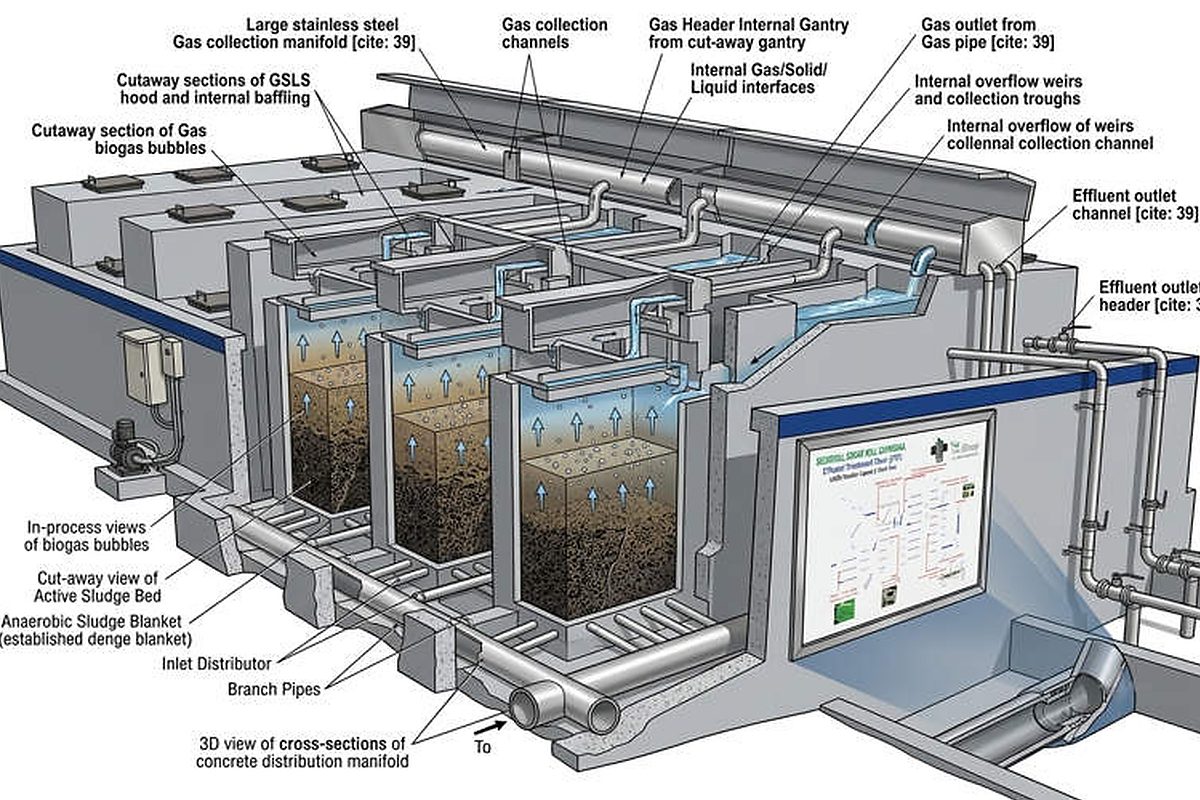
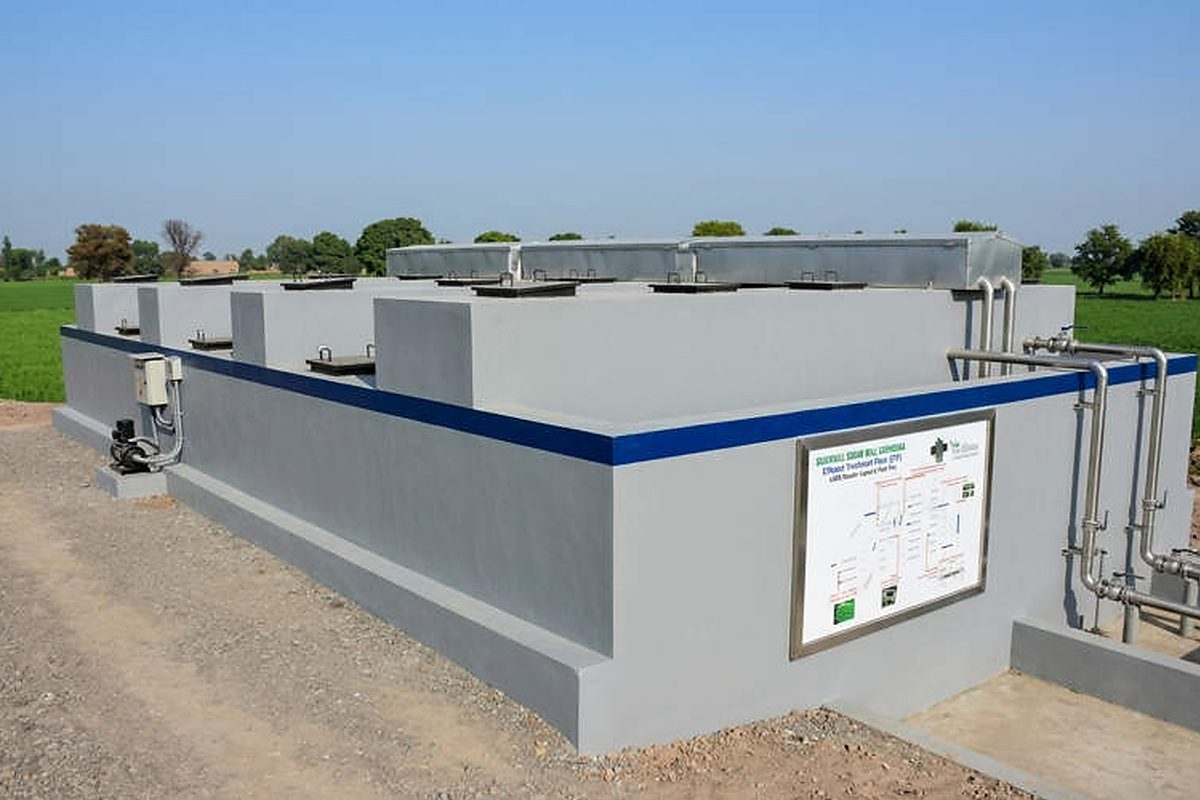

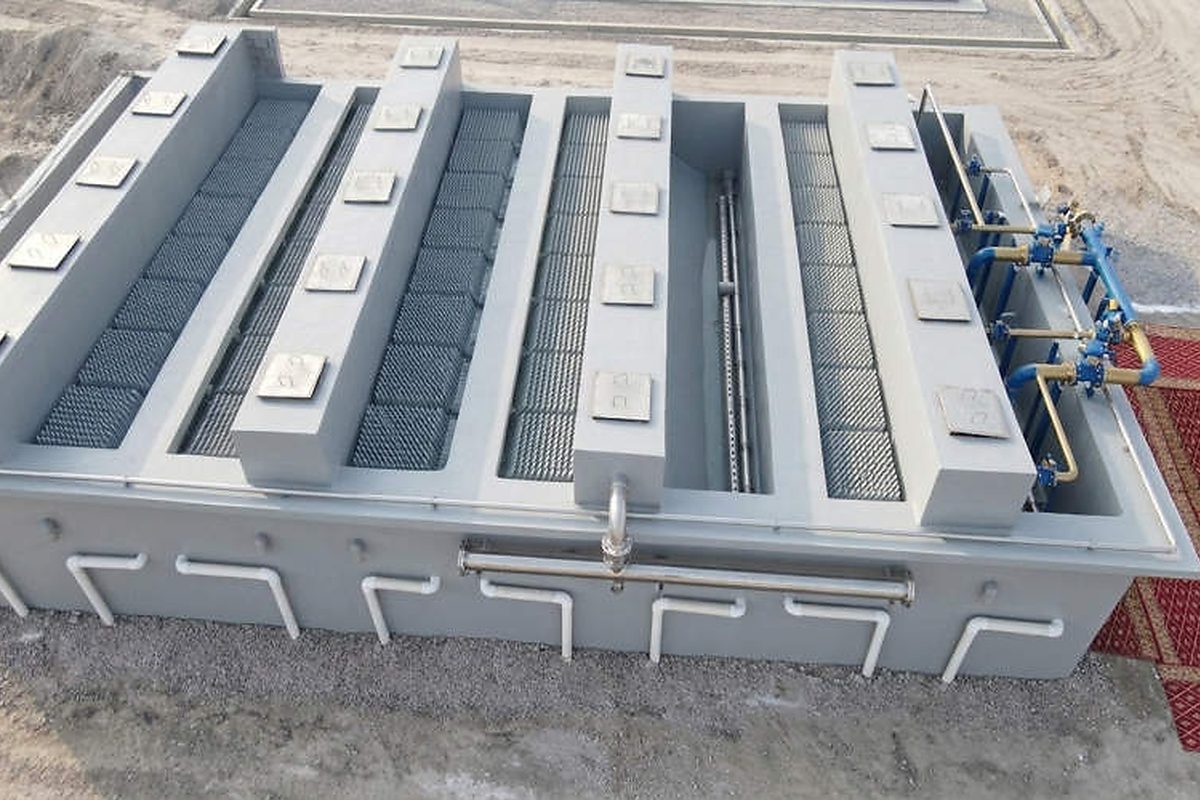
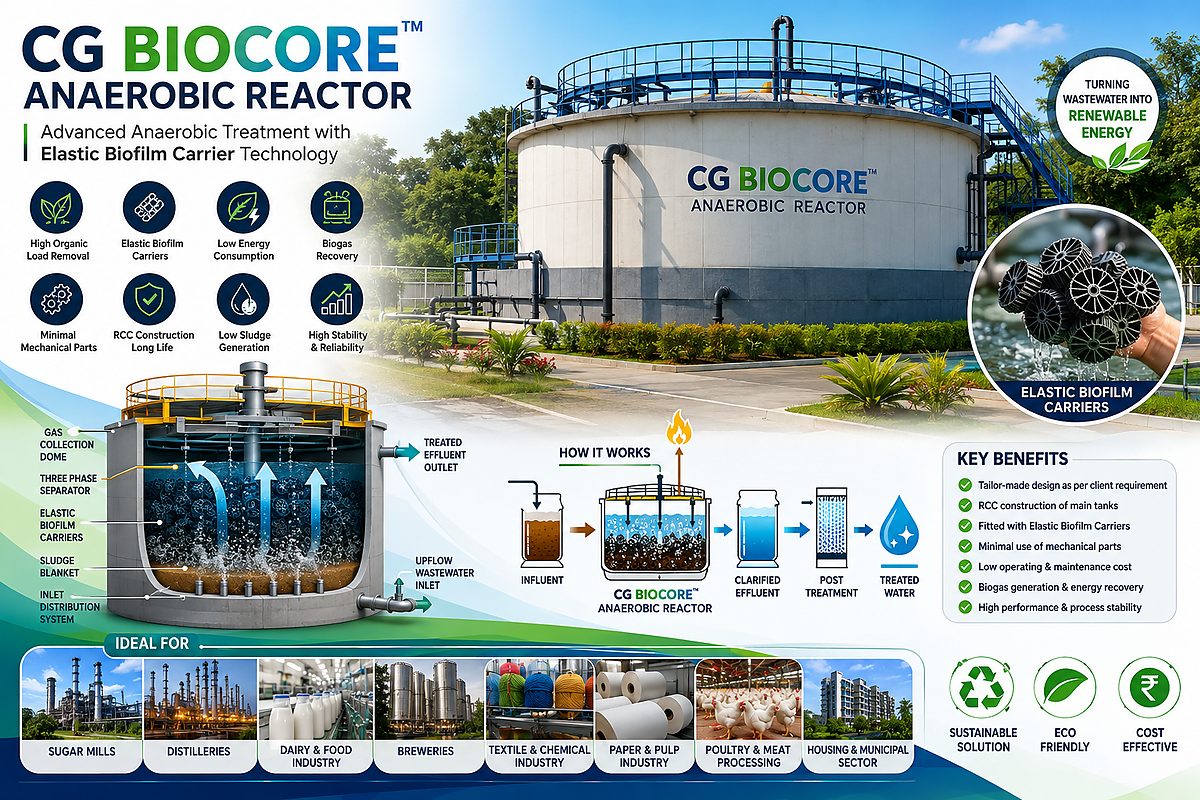
Some images are technical illustrations. Real installation photographs where marked.
Overview
The CG BioCore UASB™ (Upflow Anaerobic Sludge Blanket) reactor is a proven high-rate anaerobic treatment system for high-strength organic industrial wastewater with COD concentrations from 1,000 to 30,000 mg/L. As wastewater flows upward through a dense blanket of granular anaerobic sludge, organic pollutants are broken down by specialised microorganisms — producing biogas (60–70% methane) as a valuable energy by-product. The result is significant COD and BOD reduction, very low sludge production, and energy-positive operation, making UASB the technology of choice for sugar mills, distilleries, food processors, and dairy facilities across Pakistan. The CG BioCore UASB™ is designed for the Pakistan climate, optimised for the 25–40°C temperature range that maximises anaerobic activity.
How It Works — Working Principle
Raw wastewater enters the bottom of the UASB reactor through a carefully designed distribution system that ensures uniform upward flow across the entire tank cross-section. As the effluent rises through the dense granular sludge blanket at a controlled upflow velocity (typically 0.5–1.5 m/hr), anaerobic microorganisms in the sludge granules break down complex organic molecules through a four-stage process: hydrolysis, acidogenesis, acetogenesis, and methanogenesis. Biogas produced in this process rises as bubbles that help maintain the sludge bed in suspension. At the top of the reactor, a three-phase separator (also called a gas-solid separator or GSS) separates the gas, liquid, and sludge phases: biogas is captured in the gas dome and piped to a storage or utilisation system; clarified effluent overflows to downstream treatment; and sludge particles settle back into the reactor bed by gravity, maintaining the high biomass concentration without any recycle pump.
Key Technical Features
- COD removal efficiency: 60–85% in a single stage
- BOD removal efficiency: 65–90%
- Biogas production: 0.25–0.35 m³ CH₄ per kg COD removed
- Methane content of biogas: 60–70%
- Operates at OLR (Organic Loading Rate): 5–15 kg COD/m³/day
- Granular sludge bed — self-maintaining, no carrier media
- Three-phase separator (gas-solid-liquid) integrated at top
- RCC (reinforced concrete) or steel tank construction
- Suitable for temperatures 25–40°C (optimal for Pakistan climate)
- Modular design — scalable from 50 to 5,000+ m³/day
- Very low sludge production vs aerobic systems (0.05–0.1 kg VSS/kg COD)
- HRT (Hydraulic Retention Time): 4–10 hours
- Biogas can be used for heating, power generation (via gas engine), or flaring
- Start-up time with granular seed sludge: 4–8 weeks
Typical Design Parameters
| Parameter | Range / Value |
|---|---|
| Flow Range | 50–5,000 m³/day |
| Inlet COD | 1,000–30,000 mg/L |
| COD Removal | 60–85% |
| BOD Removal | 65–90% |
| OLR | 5–15 kg COD/m³/day |
| HRT | 4–10 hours |
| Upflow Velocity | 0.5–1.5 m/hr |
| Temperature | 25–40°C |
| Biogas Yield | 0.25–0.35 m³/kg COD |
| CH₄ Content | 60–70% |
| Sludge Production | 0.05–0.1 kg VSS/kg COD |
| Construction | RCC or Steel |
Applications
- Sugar mill process water and distillery effluent (vinasse)
- Food and beverage manufacturing wastewater
- Dairy processing: milk, cheese, whey, butter wastewater
- Edible oil refinery and palm oil mill effluent
- Brewery and fermentation plant wastewater
- Slaughterhouse and meat processing effluent
- Paper and pulp mill wastewater
- Pharmaceutical manufacturing (biodegradable fraction)
- High-strength leachate pre-treatment
- Municipal sewage (where biogas recovery is a priority)
Advantages
- Energy-positive operation — biogas offsets electrical energy costs
- Very low sludge production — minimises sludge disposal costs
- No aeration required — low electricity consumption
- High COD removal in a compact reactor volume
- Long reactor life (20–30 years with proper maintenance)
- Self-regulating sludge bed — no moving parts inside reactor
- Biogas by-product can be used for gas engine power generation
- Low operator skill requirement once system is established
- Can treat wastewater with very high organic loads
- Granular sludge bed can withstand shock loads
Frequently Asked Questions
Request Technical Proposal
Share your project details and our engineers will prepare a tailored technical and commercial proposal within 48 hours.