Some images are technical illustrations. Real installation photographs where marked.
Overview
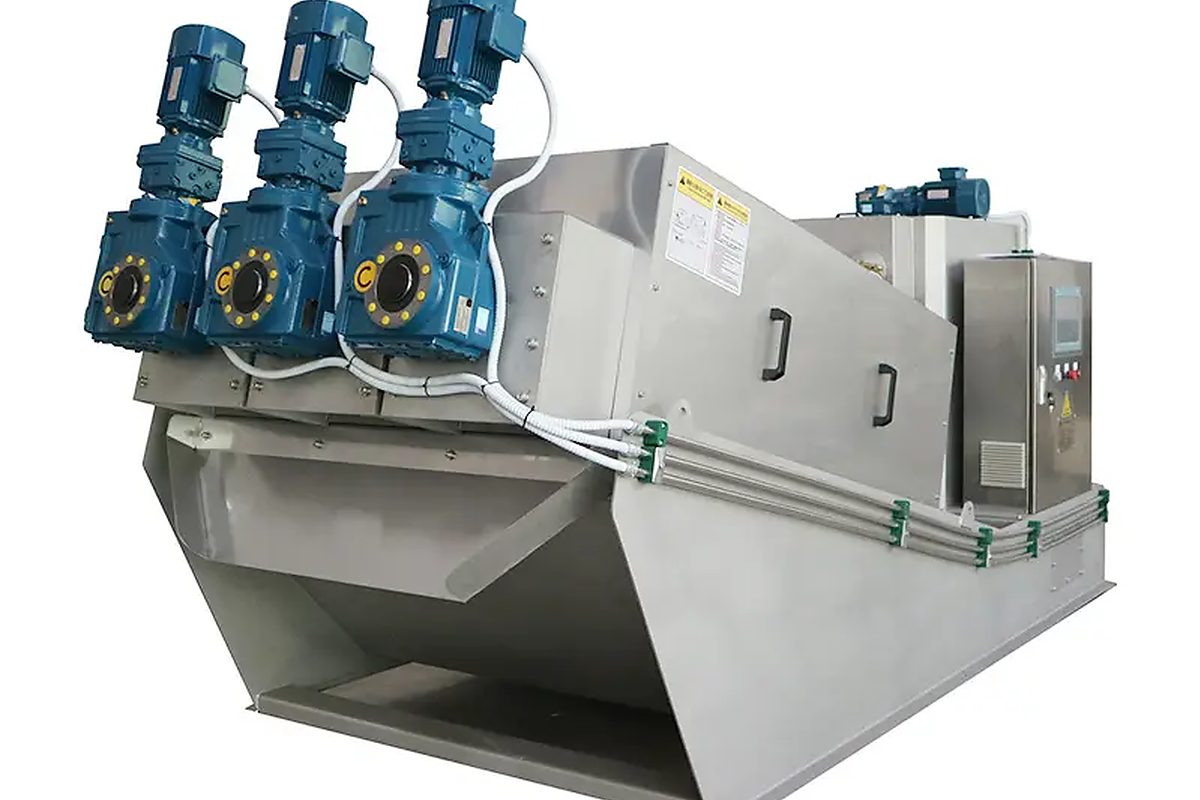
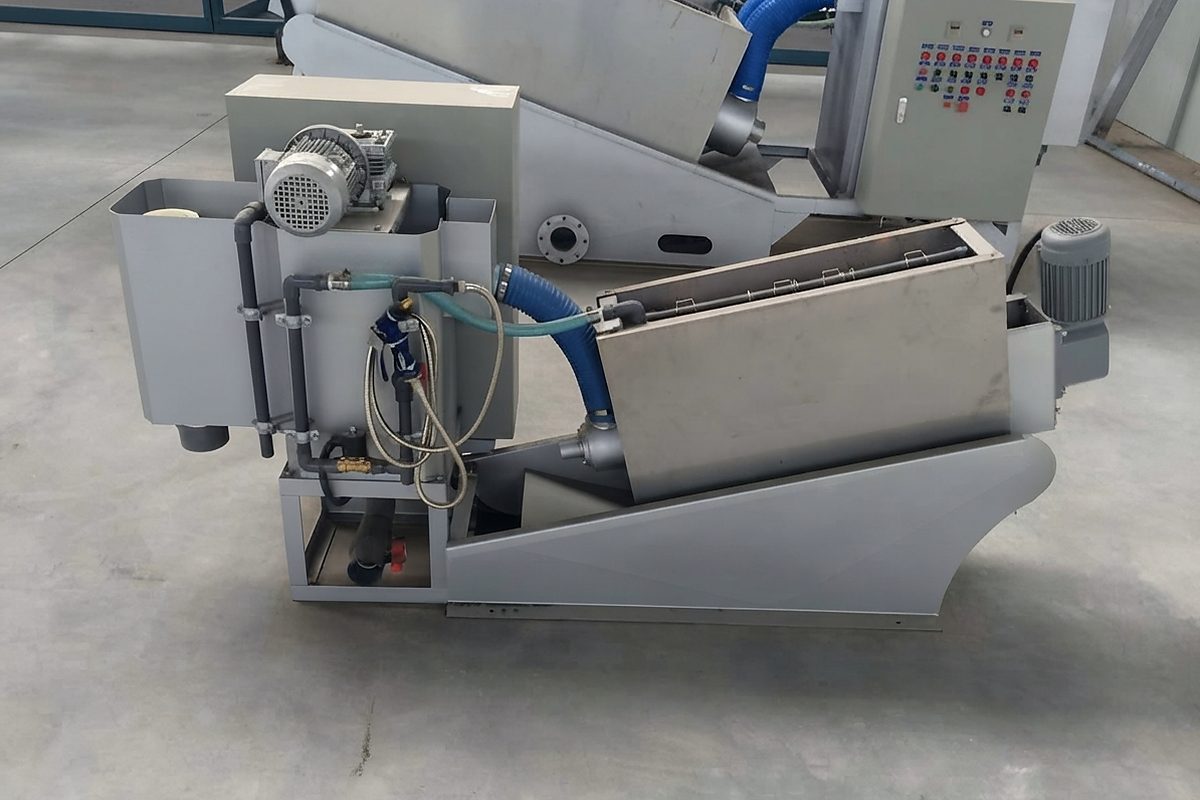
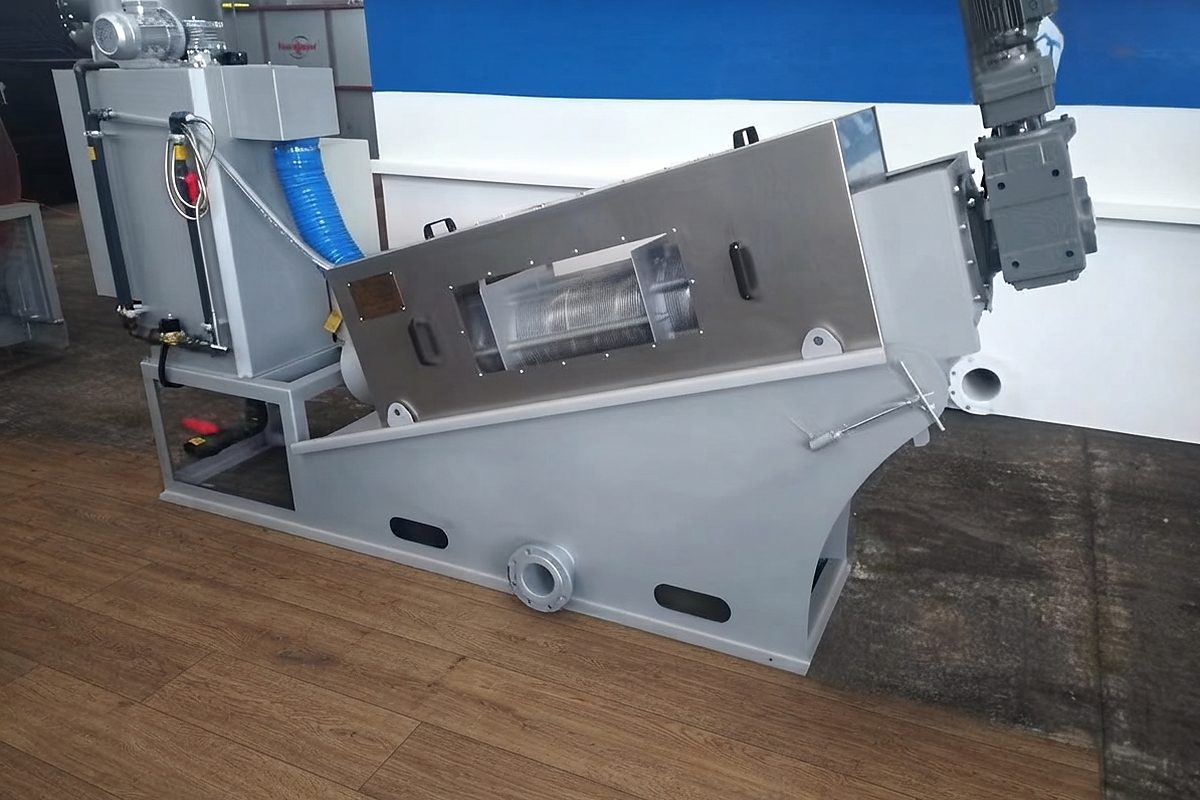
The CG Volute Screw Press™ is an advanced low-speed continuous sludge dewatering machine achieving cake solids of 15–25% DS from dilute sludge feeds as low as 0.2% DS — without a pre-thickener. Operating at only 2–4 rpm, the Volute Press is extremely quiet, consumes a fraction of the energy of conventional dewatering equipment, and operates fully automatically with minimal maintenance. The distinctive volute (spiral) design of alternating fixed and moving rings provides self-cleaning action preventing clogging — the most common failure mode in conventional screw presses. Suitable for dewatering biological sludge from SBR, MBR, UASB, and conventional activated sludge systems.
Working Principle
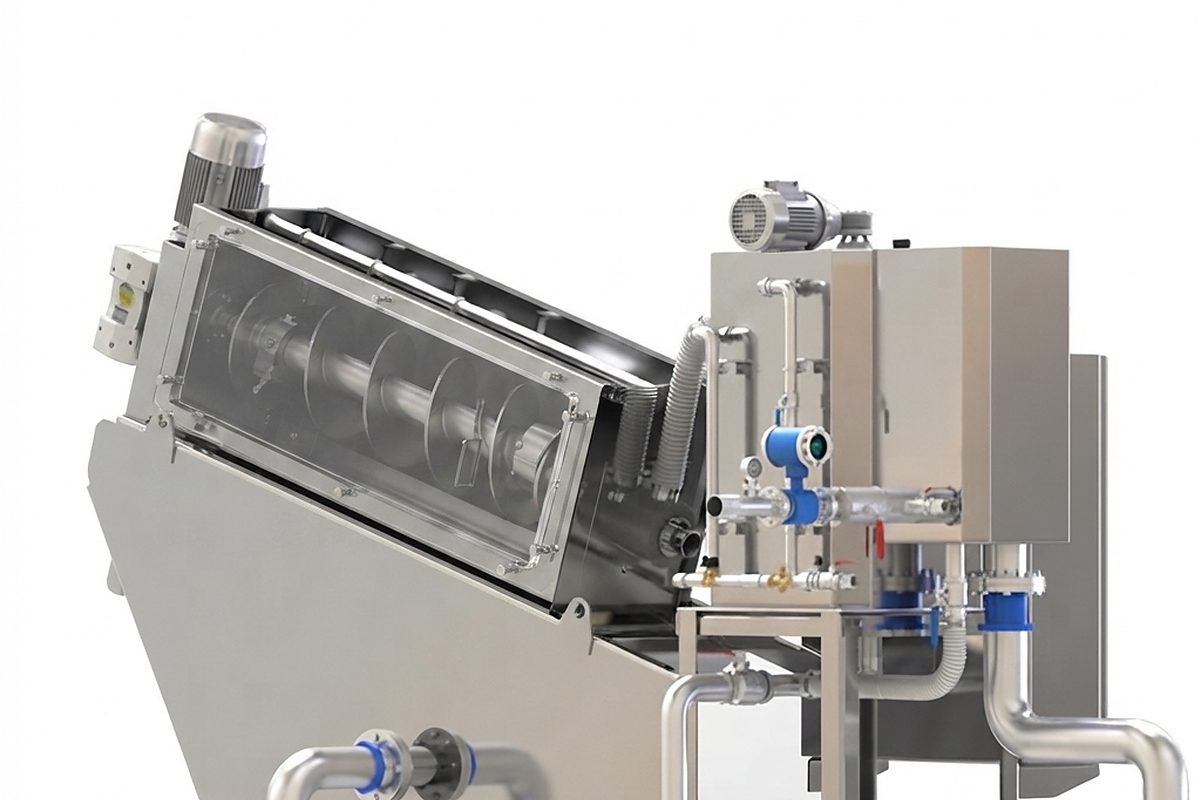
Dilute sludge mixed with polymer flocculant in an inline static mixer enters the dewatering unit. It passes into the dewatering cylinder — a spiral arrangement of alternating fixed rings (attached to the frame) and moving rings (attached to a rotating shaft). As the screw rotates slowly at 2–4 rpm, the progressively decreasing pitch creates increasing compression. Filtrate drains through the gaps between fixed and moving rings (0.1–0.5 mm) by gravity. The moving rings self-clean the filtrate gaps continuously, preventing clogging. The compressed sludge cake exits through an adjustable back-pressure plate controlling cake dryness.
Key Technical Features
- Feeds dilute sludge at 0.2–1.0% DS — no pre-thickener
- Cake output: 15–25% DS
- Very low energy: 0.01–0.05 kWh/kg DS
- Speed: 2–4 rpm — very quiet (<65 dB)
- Self-cleaning moving ring design — no clogging
- Continuous 24/7 automated operation
- Back-pressure plate for cake dryness adjustment
- Low wash water requirement
- Compact — stackable multi-unit installation
- Polymer dosing system integrated
Design Parameters
| Parameter | Value |
|---|---|
| Feed DS | 0.2–1.0% |
| Cake DS | 15–25% |
| Energy | 0.01–0.05 kWh/kg DS |
| Speed | 2–4 rpm |
| Capacity | 5–500 kg DS/hr/unit |
| Noise | <65 dB |
| Automation | PLC Automated |
Applications
- Waste activated sludge from SBR and MBR
- Biological sludge from conventional activated sludge
- Chemical/physical sludge from DAF/SAF float
- UASB excess sludge
- Municipal STP sludge dewatering
- Industrial ETP sludge handling
- Food processing and pharmaceutical sludge
Advantages
- Eliminates pre-thickener and thickener sludge pumps
- 80–90% energy saving vs centrifuge
- Near-silent — suitable for residential-area plants
- No clogging — self-cleaning moving ring
- Fully automated — no continuous operator attendance
- Low polymer consumption vs belt press
- Easy installation — plug-and-play
- Low maintenance — annual inspection only
Frequently Asked Questions
Request Technical Proposal for CG Volute Screw Press™
Share your project details — our engineers will respond within 48 hours.